Configure-Price-Quote Selection Guide
Identify the best tools for your sales automation needs.
- As a manual process, CPQ is inefficient and error-prone. Salespeople spend a large portion of their time flipping through product catalogs and stuck on email chains for the approval of prices.
- Margins are eroded by discounts that fly under the radar. Errors are common at all stages of the process.
- The drawn-out administrivia in between intent-to-purchase and contract generation slows the sales cycle, threatening conversions.
Our Advice
Critical Insight
- Despite the benefits CPQs offer sales reps, there can be resistance due to the perceived decrease in autonomy caused by the rigid logic of rules engines.
- Modern CPQ platforms can require significant amounts of data for the best analysis and recommendations.
- CPQs are extensive and feature rich. In systems with such a breadth of process it’s easy to get lost in the functionality. Value is unlikely to be realized without strategic selection and configuration.
Impact and Result
- Choose a CPQ that is right for you by identifying which features will drive the most value and selecting a vendor that specializes in that niche.
- Maintain the right level of complexity. Keeping the system as simple as possible by enabling only relevant features helps encourage sales rep buy-in. A good UX/UI is also essential.
- Strong data governance and change management will help ease the transition.
Configure-Price-Quote Software Selection Guide
Identify the best tools for your sales automation needs.
Analyst Perspective
Configure, Price, or Quote? Asymmetric functionality is the name of the game for CPQ providers and clients.

Configure-Price-Quote (CPQ) systems are an essential part of the everyday sales process. Originating in the 2000s to facilitate quicker recall of pricing standards and product catalogs, these systems have since advanced into flexible, intelligent engines leveraging vast amounts of data. At its most basic, a CPQ solves the inefficiencies and inaccuracies of manual quoting through automation. At their best, CPQs provide additional benefits like maximized margins, personalized customer experience, and acceleration of the sales cycle.
Successfully navigating the CPQ marketspace is all about understanding the level of complexity required by your organization. The CPQ system encompasses three key functions: product configuration, price setting, and quote generation. While a few vendors provide generalized operationality, most differentiate themselves by excelling in one or two of these key areas – a strategy in alignment with business needs, as different sales processes typically will benefit from increased complexity in whichever function is most relevant.
Industry specialization is a great way to begin to navigate CPQ specialization. Although sales norms vary across businesses in general, standardization is common according to industry. Pay attention to the target market and proven clients of each CPQ vendor: they will provide guidance on whether that system is in alignment with your needs.
CPQ is expanding across the entire RevOps cycle through both increased functionality and integrations with enterprise systems. With these systems expected to grow in importance and scope, now is an ideal time to invest in a flexible, future-oriented solution in your niche.
Maya Chambers
Senior Analyst, Customer Experience & Application Insights
Info-Tech Research Group
Executive summary
Your Challenge
- As a manual process, CPQ is inefficient and error-prone. Salespeople spend a large portion of their time flipping through product catalogs and stuck on email chains for the approval of prices.
- Margins are eroded by discounts that fly under the radar. Errors are common at all stages of the process.
- The drawn-out administrivia in between intent-to-purchase and contract generation slows the sales cycle, threatening conversions.
Common Obstacles
- Despite the benefits CPQs offer sales reps, there can be resistance due to the perceived decrease in autonomy caused by the rigid logic of rules engines.
- Modern CPQ platforms can require significant amounts of data for the best analysis and recommendations.
- CPQs are extensive and feature rich. In systems with such a breadth of process it’s easy to get lost in the functionality. Value is unlikely to be realized without strategic selection and configuration.
Info-Tech’s Approach
- Choose a CPQ that is right for you by identifying which features will drive the most value and selecting a vendor that specializes in that niche.
- Maintain the right level of complexity. Keeping the system as simple as possible by enabling only relevant features helps encourage sales rep buy-in. A good UX/UI is also essential.
- Strong data governance and change management will help ease the transition.
Info-Tech Insight
Gain a comprehensive understanding of the sales process before embarking on selection to ensure the chosen software is the right fit. Involving sales stakeholders early in analysis will provide benefits later in implementation.
Info-Tech’s methodology for selecting an appropriate configure-price-quote software
1. Understand the CPQ Landscape and Trends |
2. Select the Right CPQ Vendor |
|
Phase Steps |
|
|
Phase Outcomes |
|
|
Guided Implementation
What does a typical GI on this topic look like?
Phase 1 |
Phase 2 |
|
|
A Guided Implementation (GI) is a series of calls with an Info-Tech analyst to help implement our best practices in your organization.
The CPQ selection process should be broken into segments:
- Create a vendor shortlist using this selection guide.
- Define a structured approach to selection.
- Review the contract.
Info-Tech offers various levels of support to best suit your needs
DIY Toolkit
“Our team has already made this critical project a priority, and we have the time and capability, but some guidance along the way would be helpful.”
Guided Implementation
“Our team knows that we need to fix a process, but we need assistance to determine where to focus. Some check-ins along the way would help keep us on track.”
Workshop
“We need to hit the ground running and get this project kicked off immediately. Our team has the ability to take this over once we get a framework and strategy in place.”
Consulting
“Our team does not have the time or the knowledge to take this project on. We need assistance through the entirety of this project.”
Diagnostics and consistent frameworks are used throughout all four options.
Configure, Price & Quote Platform Selection Guide
Speed up the process to build your requirements and select the right CPQ platform for your organization.
EXECUTIVE BRIEF
What exactly is a CPQ platform?
Configure-price-quote (CPQ) software is an advanced sales automation tool designed to streamline how businesses generate highly configured and precise quotes. In companies with complex product/service offerings or strict pricing accuracy and compliance needs, CPQ replaces manual quoting (like spreadsheets or ad hoc tools) with a guided, rules-driven system. CPQ software's main use case is for salespeople to centralize, automate, and make available the right information in real time, but it can also be useful to product engineers and business analysts looking to glean more insights from sales scenarios. There are various unique capabilities for different types of industry and product needs, but in general, CPQ software uses rules and automation to make the quoting process faster, more accurate, and controlled.
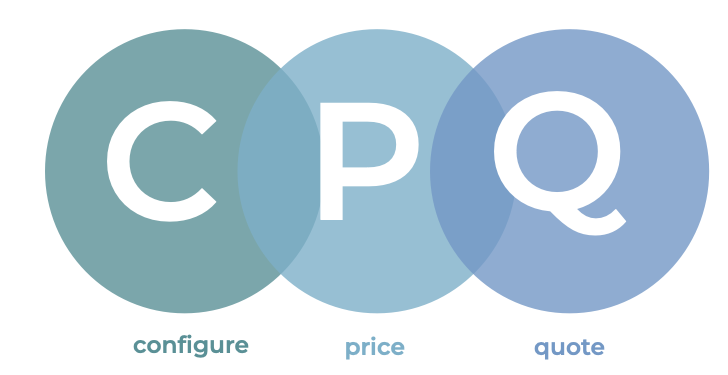
CPQ offers many key features, but its functions tend to fit under three main categories:
- Configure: The process of selecting and customizing products or services to meet a customer’s specific requirements.
- Price: The system calculates the total cost of the configured solution.
- Quote: The formal offer or proposal generated from the configuration and pricing data.
Info-Tech Insight
CPQ solutions always include general capabilities for their three namesake functionalities but the configure, price, and quote functions each have particular purposes, trends in development, and unique advanced capabilities. Vendors tend to cater to a certain subcategory for more robust functionality. Identifying which part of CPQ will glean the most value for your organization is essential to identifying a good-fit vendor.
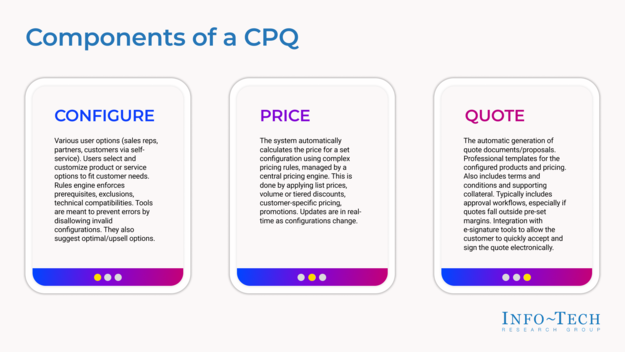
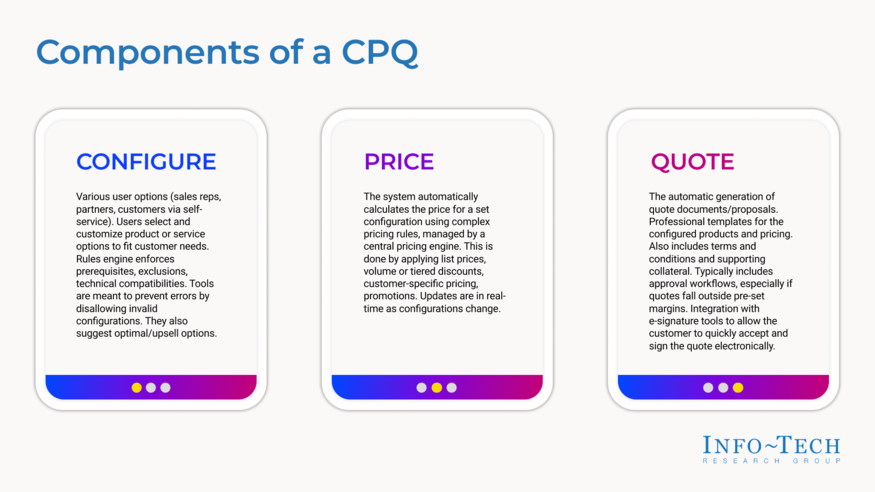
Components of a CPQ
Configure
Various user options (sales reps, partners, customers via self-service). Users select and customize product or service options to fit customer needs. Rules engine enforces prerequisites, exclusions, technical compatibilities. Tools are meant to prevent errors by disallowing invalid configurations. They also suggest optimal/upsell options.
Advanced Features
- Guided selling: prompts to help users navigate large catalogs
- Bundling: guides the packaging of products
- Visual configurators: 2D/3D visualizations to see the end product
Price
The system automatically calculates the price for a set configuration using complex pricing rules, managed by a central pricing engine. This is done by applying list prices, volume or tiered discounts, customer-specific pricing, promotions. Updates are in real-time as configurations change.
Advanced Features
- Multicurrency pricing (for global sales)
- Newer pricing models: subscription, usage based
- AI pricing optimization
Quote
The automatic generation of quote documents/proposals. Professional templates for the configured products and pricing. Also includes terms and conditions and supporting collateral. Typically includes approval workflows, especially if quotes fall outside pre-set margins. Integration with e-signature tools to allow the customer to quickly accept and sign the quote electronically.
Features
- In some cases, CPQ extends to full proposal generation, which includes adding marketing content or technical specs with the quote.
CPQ process flow
CPQ bridges the gap between the customer’s requirements and the fulfillment of an order.
Opportunity/ Intention to Buy
- Lead qualification and opportunity creation (CRM)
- Capturing customer requirements
- Linking opportunity to product categories
Configure Products/ Services
- Product configurator (rules engine)
- Guided selling
- Product catalog management
- Validation
- Visualization
Price
- Pricing engine
- Discount and approval threshold
- Cost/margin analytics
- Version management
- Multicurrency and localization support
Quote
- Automated quote generation
- Template management
- Version control
- Workflow drafting, review, submission
Generate Proposal
- Dynamic templates for proposal generation
- Content library
- E-signature integration
- Multilanguage, multiformat document generation
Action Proposal
- Integration with CLM
- Version control and audit trail
- Collaboration tools
- Conditional logic for exceptions
Final Order
- Rules-based approval routing
- Audit and compliance logging
- Revenue accounting
- Order fulfillment (ERP integration)
A part of the larger lead-to-cash sales-based business cycle, the CPQ begins with the customer’s intention to buy and ends with revenue recognition.
About Info-Tech
Info-Tech Research Group is the world’s fastest-growing information technology research and advisory company, proudly serving over 30,000 IT professionals.
We produce unbiased and highly relevant research to help CIOs and IT leaders make strategic, timely, and well-informed decisions. We partner closely with IT teams to provide everything they need, from actionable tools to analyst guidance, ensuring they deliver measurable results for their organizations.
What Is a Blueprint?
A blueprint is designed to be a roadmap, containing a methodology and the tools and templates you need to solve your IT problems.
Each blueprint can be accompanied by a Guided Implementation that provides you access to our world-class analysts to help you get through the project.
Need Extra Help?
Speak With An Analyst
Get the help you need in this 2-phase advisory process. You'll receive 4 touchpoints with our researchers, all included in your membership.
Guided Implementation 1: Configure, Price & Quote Platform Selection Guide
- Call 1: Understand the concept of a CPQ platform, and explore its core capabilities and emerging trends.
- Call 2: Define your key CPQ requirements.
Guided Implementation 2: Select the Right CPQ Vendor
- Call 1: Evaluate the CPQ vendor landscape and shortlist viable options.
- Call 2: Review implementation considerations.
 Build a Strong Technology Foundation for Customer Experience Management
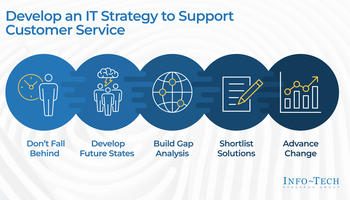 Develop an IT Strategy to Support Customer Service
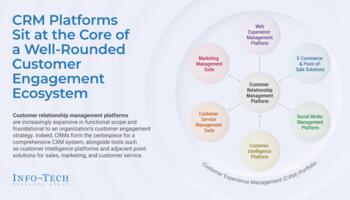 Customer Relationship Management Platform Selection Guide
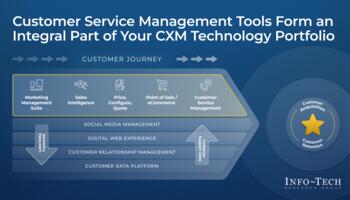 Customer Service Management Software Selection Guide
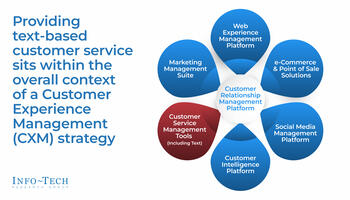 Drive Customer Convenience by Enabling Text-Based Customer Support
 Build a Chatbot Proof of Concept
 Enable Omnichannel Commerce That Delights Your Customers
_preview6115.png?1693949498 "Review our research on Get the Most Out of Your CRM") Get the Most Out of Your CRM
Get the Most Out of Your CRM
 Select an Enterprise Application
 2020 Applications Priorities Report
 Adapt Your Customer Experience Strategy to Successfully Weather COVID-19
 Configure-Price-Quote Selection Guide